Variance: why results swing
Perfect play improves the average; it doesn't smooth the ride.
Similar average, different ride
9/6 Jacks or Better returns 99.54% with perfect play. Triple Double Bonus returns 99.58%. Those averages are close, but the games do not feel alike. Jacks or Better returns more through ordinary two pair and full houses. Triple Double Bonus pays less for common results and shifts more value into rare four-of-a-kind combinations with kickers.
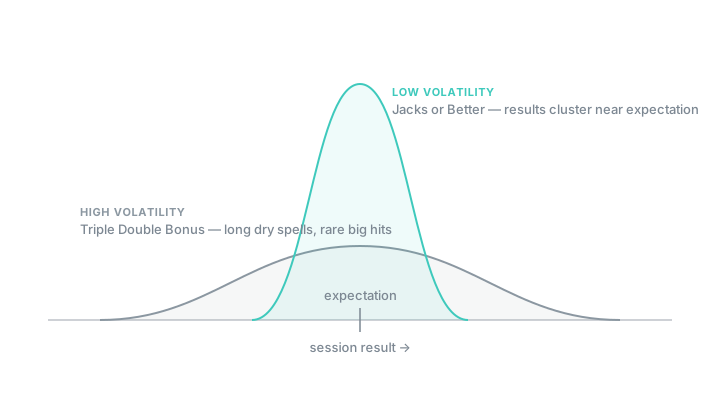
Variance measures how widely outcomes spread around their average; volatility is the player-facing term for the same idea. Perfect strategy improves the center by removing avoidable mistakes. It does not narrow the distribution built into the pay table.
Rare hands carry a meaningful part of the return
Under optimal 9/6 Jacks or Better strategy, a royal flush is completed roughly once per 40,000 hands and contributes about two percentage points of the game’s total return. Before a royal arrives, results can look as if a large piece of the advertised return is missing—because, in that sample, it is.
“One in 40,000” is an average interval, not an appointment. Even after 40,000 hands, a royal-free run is not remotely impossible. Going longer does not make the next hand due; it only describes what has already happened.
How volatility changes the experience
| Catalog label | Examples here | What a short sample may feel like |
|---|---|---|
| Low | Jacks or Better · Bonus Poker | More frequent modest returns; still capable of long losses. |
| Medium | Bonus Deluxe · Double Bonus · Deuces Wild | More of the average arrives through premium hands. |
| High | Triple Double Bonus | Large, abrupt swings with more value concentrated in rare kicker quads. |
These labels compare the games in this catalog; they do not predict a session or set a “safe” bankroll. Sharper Edge’s bankroll is an imaginary counter you can reset. In real gambling, a larger bankroll only lets exposure continue longer—it cannot make a negative-expectation game safe or guarantee reaching a rare award.
Judge the decision with the information available
The reverse is equally important: a winning session does not prove the holds were good. Results are emotionally vivid and statistically noisy. The exact EV of a decision is a cleaner teaching signal.
If gambling for real is part of your life, set affordable money and time limits before playing rather than sizing a bankroll around the hope of surviving until a jackpot. The responsible-play lesson covers practical boundaries and current support options.
Try it at the table
Try 9/7 Triple Double Bonus, then compare it with 9/6 Jacks or Better. Watch how quickly the practice balance and individual payouts move.